Medically Reviewed by Dr. Steph Laurent , DVM — August 22, 2025
Whether it’s a soft rasp on your cheek or a full grooming session on your hand, cat licking often leaves owners both curious and a little amused. If you’ve ever asked, “Why does my cat lick me?”—you’re not alone. This article breaks down the most common (and surprising) reasons behind this quirky feline behavior, the science behind it, and whether you should let it continue.
Let’s dive into the fuzzy world of cat licks with a little story from my life with Mocha and Mochi, and explore what it really means when your kitty turns your arm into a lollipop.

Table of Contents
My Cats Lick Me: A Tale of Trust and Tongues
Feline Affection in Action
I still remember the first time Mochi, my tabby queen, gently licked my hand. I’d just finished brushing her, and she looked up at me with those sleepy, slow-blinking eyes. Then—one soft, deliberate lick. At the time, I thought, “Is this a kiss?” I giggled and let her continue. That tiny moment became a daily ritual, right after grooming or feeding. It wasn’t just adorable—it felt personal, like she’d claimed me in some quiet feline ceremony.
Mocha, on the other hand, was more exuberant. His licks came fast and sloppy, often mid-snuggle or during playtime. His enthusiasm made me wonder if it was love, habit, or something more. Over time, I realized their licking meant different things—and that’s when I started researching. The more I learned, the more I understood that licking is about more than just affection.
Just like that first homemade chicken and rice meal changed how I saw pet food, these little “grooming gifts” shifted how I saw our bond. Cats don’t waste effort. If they’re licking you, there’s always a reason.

A Personal Story with Mocha & Mochi
Licking is part of our daily connection. Sometimes, after I write a post for Pawful of Love, I’ll lie down with Mocha on one side, Mochi on the other. That’s usually when the grooming starts. Mocha might lick my fingers while I stroke his ears, and Mochi—well, she gives me one or two “queenly” licks, then rests her chin on my shoulder like we’re in on a secret.
These moments are more than cute—they’re clues. Mocha licks when he’s happy or soothed, especially after a walk or snack. Mochi does it when she’s calm or showing affection. Through this, I realized: cat licking is never random. It’s communication. Whether it’s claiming territory, expressing love, or just looking for a little peace, licking tells a story.
By the way, if you’re looking for ways to keep your cat emotionally fulfilled, our post on homemade calming cat treats might help with those licky-love sessions too.
Coming up next: what science says about the reasons cats lick their humans—and how it ties back to instinct, comfort, and communication.
In the meantime, if you’ve ever noticed your cat licking right after a stressful event (a vet trip, thunderstorm, or after seeing another pet), you’ll love our breakdown on understanding cat anxiety and behavioral signals.
Understanding Feline Behavior: Why Does My Cat Lick Me So Much?
Territory and Grooming Instincts
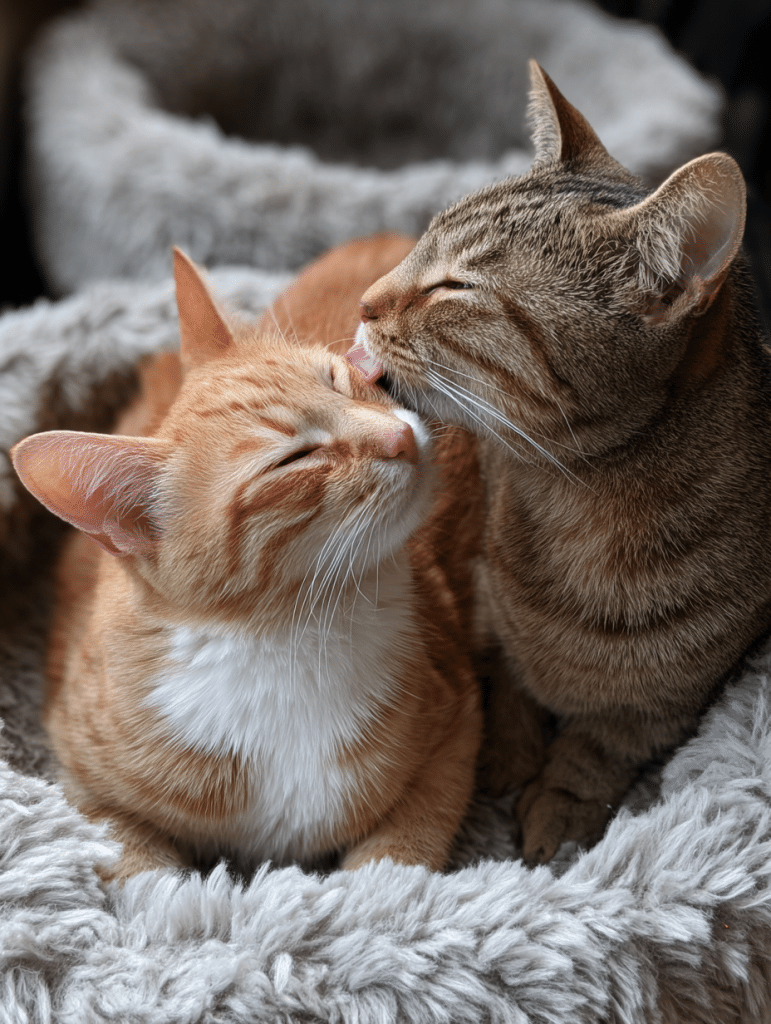
If you’ve ever watched two cats groom each other, you’ve witnessed a powerful behavior called allogrooming. It’s common in bonded cats and helps establish social hierarchies. When your cat licks you, it’s often this same behavior being transferred to you—they’re treating you like one of their own.
From your cat’s perspective, licking you helps mark you as “theirs”. Cats have scent glands in their mouths, so the act of licking transfers their scent to your skin, claiming you as part of their territory. This instinct is deep-rooted and stems from how mother cats groom their kittens in the earliest stages of life.
Cats who exhibit this behavior are often confident in their relationship with you. If your cat licks you, purrs, and even kneads at the same time, they’re showing trust. This is common in companion cats, especially those with secure home lives.
We dive deeper into scent-based communication in our guide on cat marking behavior—a must-read if your cat’s licks are followed by head butts or rubbing against you.
According to the Cornell Feline Health Center, grooming is a key part of feline communication and social bonding.
Social Bonding: You’re Part of the Pack
While cats aren’t pack animals like dogs, they do form complex social structures—especially in multi-cat households. Licking helps reinforce those bonds. It’s the feline equivalent of a hug, especially when combined with cuddling or grooming behaviors.
Interestingly, some cats are more prone to this than others. Former strays or rescue cats (like my Mocha) may lick more as a form of learned bonding. It’s their way of saying, “You’re family now.”
If you’re raising a kitten, check out our homemade kitten milk recipe to support those early bonding stages. A well-fed, emotionally connected kitten often grows into a loving, lick-happy adult.
More Than Love: Is Cat Licking an Emotional Signal?
Stress, Anxiety & Comfort Seeking
Not all licking is about affection. In some cases, excessive licking can point to stress, anxiety, or underlying emotional discomfort. Just like people bite nails when anxious, cats might lick themselves—or you—for relief.
Changes in the household, a new pet, or loud noises can trigger these responses. If your cat’s licking is paired with coughing or other unusual signs, it may be worth exploring possible health issues like why is my cat coughing?
Increased licking may also appear after traumatic events. Mochi became noticeably lickier after we moved apartments, and I realized it was her way of coping. It helped her relax, especially when paired with pheromone sprays or quiet bonding time.
For more signs of feline stress, check our article on how to tell if your cat is overstimulated or anxious. It can help you distinguish love-licks from stress-licks.
Attention-Seeking or Learned Behavior
Here’s a little secret: your cat might be licking you… because it works. If you pet them, talk to them, or laugh when they lick, they’ve learned that licking = attention.
Cats are sharp. They quickly associate behaviors with results. If licking gets them interaction, they’ll repeat it—especially when bored or craving stimulation.
To reduce excessive licking, offer alternatives like puzzle feeders or scent-based toys. Also, create consistent cuddle routines to reassure them without reinforcing over-licking.
Our DIY cat enrichment toys article is packed with solutions to redirect this behavior in healthy ways.
Letting Cats Lick: Cute Habit or Hygiene Hazard?
Health Considerations for Humans
While most healthy cats carry minimal bacteria in their saliva, there’s still some risk involved in letting your cat lick open wounds or your face. Cats’ mouths harbor bacteria like Pasteurella multocida and Bartonella henselae.
Safe interaction means being mindful of hygiene and diet. Just like we monitor safe foods, it’s smart to review what’s off-limits in our human foods for cats list to avoid hidden dangers.
If you’re immunocompromised or have sensitive skin, it’s best to avoid being licked frequently. That doesn’t mean you need to reject your cat’s love—but you can gently redirect with a toy or cuddle.
Remember, safe interaction means being mindful. Just like we wash hands after litter box duty, it’s okay to wash up after a loving lick too.
For further reading, explore our pet safety and hygiene guide—especially if your cat sleeps in your bed or shares water with dogs.
For more information, see the CDC’s overview of Bartonella henselae (Cat Scratch Disease).
Kitten Bonding / Early Stages Section
Cats groom and lick from a very early age, often copying their mothers. While bonding with kittens, be cautious with diet as well. Something that seems harmless, like yogurt, can actually upset a young stomach. Our guide on can cats eat yogurt? explains the risks and safe alternatives.
Emotional Bonding / Grooming Section
From your cat’s perspective, licking you helps mark you as theirs. It’s an extension of grooming behavior and shows deep trust.
But comfort doesn’t always have to come from licking. Sometimes, sharing a warm cup of chicken broth for cats can provide the same soothing connection without over-licking.
When to Redirect the Behavior
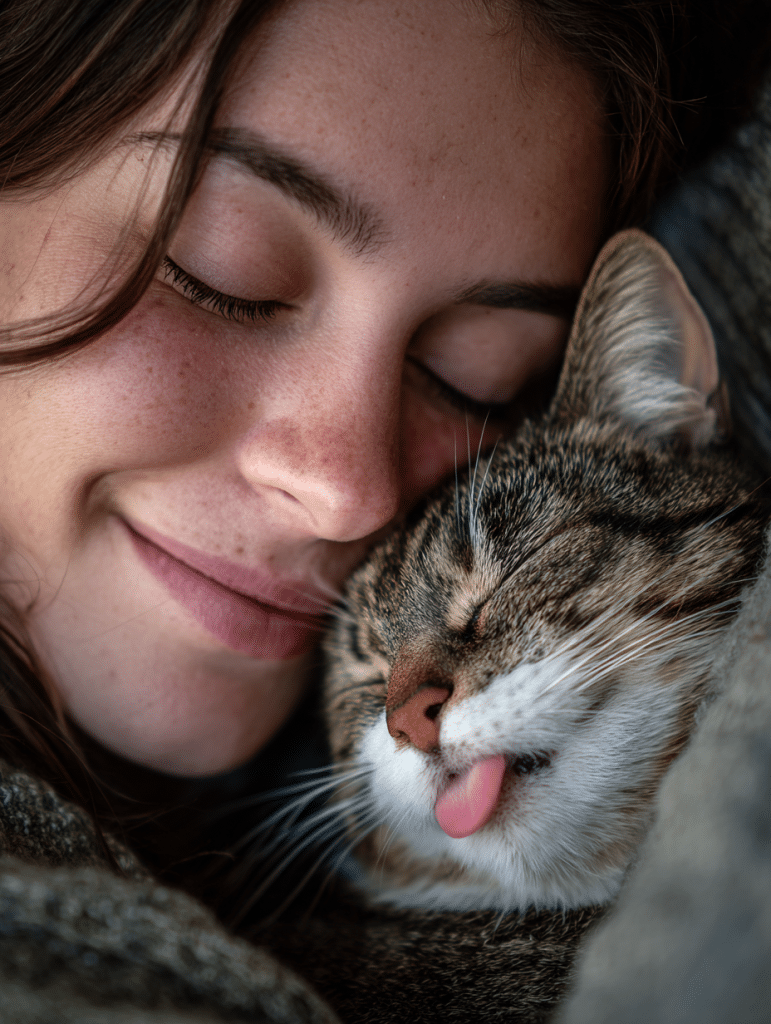
If licking becomes obsessive, causes skin irritation, or seems compulsive, it may need to be gently redirected. This behavior can morph into an obsessive-compulsive pattern, especially in high-stress cats.
Try positive distraction: interactive play, scent-based feeders, or brushing. Avoid punishment, which can break trust. If necessary, consult your vet or a feline behaviorist to explore anxiety-related solutions.
Mocha went through a phase where he licked my arm raw. I gently introduced more play, added calming herbs to his treats, and the licking slowly decreased.
Our homemade calming treat recipes can help soothe your kitty naturally if licking seems to stem from anxiety.
FAQ
Should you let your cat lick you?
Occasional licking is usually harmless and a sign of affection. However, avoid letting cats lick wounds or sensitive skin, and always wash afterward if needed.
Why do cats lick their human owners?
Cats lick their owners to bond, mark territory, and express affection. It can also be a learned behavior that gets them attention or provides comfort.
Does a cat lick mean a kiss?
Not exactly, but close! A lick is a sign of trust, familiarity, and social bonding—much like a kiss in human terms.
Are cats happy when they lick you?
Yes, most of the time. Licking usually indicates contentment, bonding, or stress relief. Pay attention to body language for added clues.
Conclusion
Every lick tells a story. Whether it’s affection, bonding, or a tiny cry for attention, when your cat licks you, they’re opening a window into their emotional world. With Mocha and Mochi, those quiet moments—one warm tongue swipe at a time—remind me that love isn’t always loud. Sometimes it’s just a gentle rasp on the back of your hand.
Next time your cat licks you, pause. Let it be a moment of connection. Then decide—do you lean in or redirect? Either way, it’s another reminder that you’re part of their inner circle.
Want more healthy, homemade ideas for your pets? Follow us on Facebook and explore daily inspiration on Pinterest.