I still remember the first time I poured warm chicken broth for cats into Mocha’s bowl. She tilted her head, sniffed the air, and within seconds her tail spun like a propeller. Mochi, always more cautious, stepped closer and dipped her paw in before giving it the slowest, most deliberate lick. That’s when I knew: broth wasn’t just nourishing—it was comforting. But not all chicken broth is created equal, and some are downright dangerous for cats. In this article, we’ll explore the health benefits, safety concerns, and how to prepare chicken broth that’s actually good for your feline family.

Table of Contents
Why Chicken Broth Can Be Beneficial for Cats
Gentle Hydration and Digestive Support
Cats are notoriously picky drinkers. Many don’t consume enough water, especially those on dry kibble diets. That’s where chicken broth for cats comes in—it’s a flavorful way to encourage hydration without force.
When served warm and plain, broth helps maintain fluid intake, especially for senior cats or those recovering from illness. It also offers mild digestive support, soothing sensitive tummies without overwhelming them. Our bone broth recipe—when made without garlic, onion, or added salt—works beautifully for cats too.
Broth has also been known to help stimulate appetite in cats who have recently lost interest in food due to stress, surgery, or medication.
Natural Nutrients and Collagen
Homemade chicken broth for cats contains minerals like calcium, magnesium, and phosphorus, especially when simmered with bones. But its true superpower lies in gelatin—a collagen-rich compound that supports joint health, skin elasticity, and digestive lining.
That’s especially helpful for senior cats or those showing signs of arthritis. While not a complete source of protein or nutrition, broth adds warmth, comfort, and nutrients to an otherwise bland meal.
If your cat has trouble chewing or eating solids, mixing broth into their meals can improve both flavor and texture. For softening dry food or hydrating raw diets, it’s a gentle and nourishing choice—just like the love stirred into every crockpot pet meal I make in our kitchen.
Chicken Broth for Cats: Benefits, Safety, and How to Serve It Right
We’ve covered the introduction and benefits. Now let’s continue with Part 3 and Part 4, followed by a Rank Math-optimized FAQ, conclusion, and SEO elements.
Safety Concerns When Using Chicken Broth for Cats
Ingredients to Avoid in Store-Bought Broth
Most commercial broths are not safe for cats. They’re often loaded with ingredients that seem harmless to us but are toxic to felines. The biggest red flags? Onion, garlic, and salt. These additives are common in human broths but can damage your cat’s red blood cells and spike blood pressure.
Even “low-sodium” or “organic” store-bought options may contain hidden seasonings. If you don’t make the broth yourself, read every label carefully. If it lists “onion powder” or “spices,” put it back.
That’s why I always go the homemade route. Our bone broth recipe uses only safe, slow-simmered ingredients. The peace of mind? Worth every minute.
Can Too Much Broth Be Harmful?
Yes—even homemade chicken broth should be served in moderation. It’s a supplement, not a full meal. Adding too much can cause:
- Imbalance in nutrition
- Loose stools
- Sodium overload (if not truly salt-free)
A teaspoon or two per meal is plenty. Think of it as a flavor boost, not a base. And avoid feeding broth daily without guidance from your vet, especially for cats with kidney, liver, or heart conditions.
If your cat has allergies or a sensitive stomach, try offering a teaspoon first. Just like when I introduced Mocha to blueberries (Can Cats Eat Blueberries?), I always start slow and watch closely.
How to Make and Serve Chicken Broth Safely
Simple Homemade Chicken Broth Recipe for Cats
Here’s a safe, vet-informed way to make your own chicken broth:

Ingredients:
- 1 lb chicken (bone-in, skin removed)
- 4 cups water
- Optional: a sprig of parsley or a few shreds of carrot
Instructions:
- Place chicken and water in a pot.
- Simmer on low heat for 3–4 hours.
- Strain completely—no bones, meat, or veggies should remain.
- Cool fully before serving.
You can freeze the broth in ice cube trays and thaw one cube at a time. Serve it over food or alone in a shallow dish.
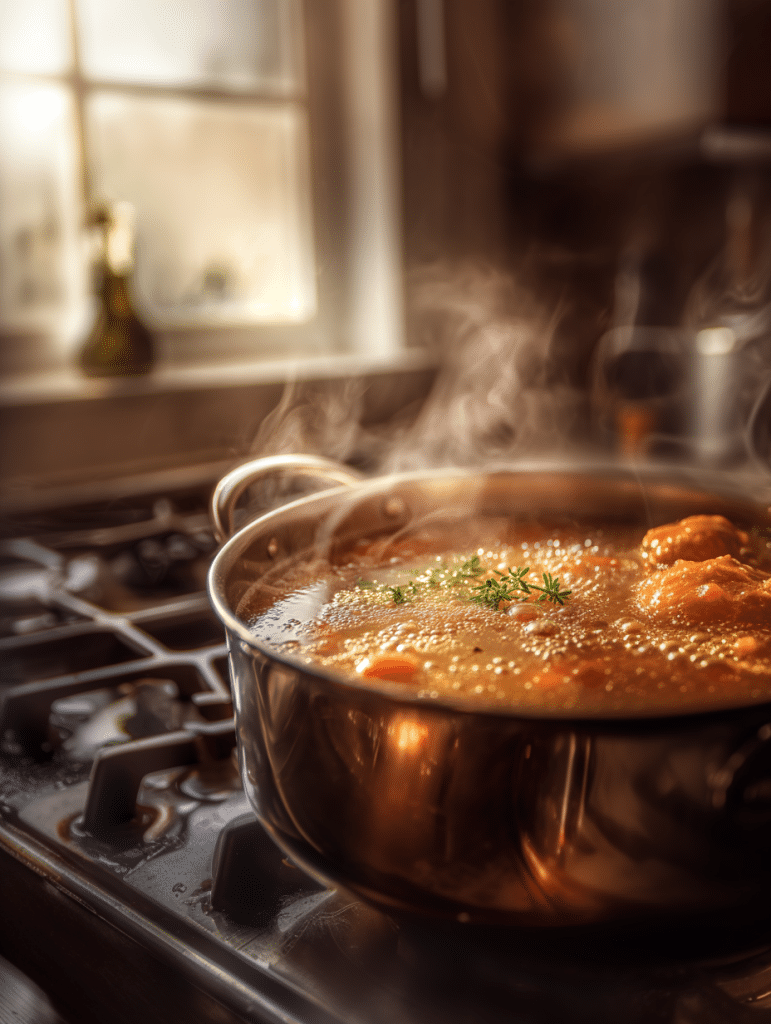
This recipe pairs perfectly with our 3-Ingredient Dog Treats if you’ve got both cats and dogs under one roof.
When and How to Serve It
Use broth when:
- Your cat is recovering from illness
- Their appetite is low
- You’re transitioning between foods
- You want to soften kibble
A small spoonful is enough to add flavor and moisture. Mochi loves her broth warmed up just a little—never boiling, always served with patience.
Print
Chicken Broth for Cats: Benefits, Safety, and How to Serve It Right
- Total Time: 3 hours 5 minutes
- Yield: 8 servings (teaspoon portions) 1x
Description
This gentle, homemade chicken broth for cats supports hydration and digestion using only pet-safe ingredients—free of salt, onion, or garlic.
Ingredients
1 lb chicken (bone-in, skin removed)
4 cups filtered water
Optional: a few carrot shreds or parsley leaves
Instructions
1. Place chicken and water in a pot on the stove.
2. Bring to a gentle simmer over low heat.
3. Simmer for 3–4 hours with the lid slightly ajar.
4. Strain all solids from the broth (no bones or meat).
5. Cool fully before serving.
6. Serve 1–2 teaspoons over your cat’s food or as a separate drink.
7. Store leftovers in the fridge for up to 3 days or freeze in cubes.
Notes
Do not add any salt, onion, garlic, or spices.
Use organic chicken when possible for better quality.
Always strain thoroughly—bones are dangerous for cats.
Start with small amounts to avoid digestive upset.
- Prep Time: 5 minutes
- Cook Time: 3 hours
- Category: Cat Treats
- Method: Simmered
- Cuisine: Pet Food
Nutrition
- Serving Size: 1–2 tsp
- Calories: 5
- Sugar: 0g
- Sodium: 5mg
- Fat: 0.2g
- Saturated Fat: 0g
- Unsaturated Fat: 0.2g
- Trans Fat: 0g
- Carbohydrates: 0g
- Fiber: 0g
- Protein: 1g
- Cholesterol: 2mg
You can even mix it with homemade dog food for multi-pet households (just keep cats’ portions separate).
Frequently Asked Questions
Is chicken broth OK for cats?
Yes, but only if it’s homemade and free from onions, garlic, salt, and artificial flavorings. Commercial broths are usually unsafe unless specifically labeled for pets. Always use plain, simmered broth made just with chicken and water—or vet-approved ingredients.
How much chicken broth to add to cat water?
Start with 1–2 teaspoons of plain, unsalted chicken broth mixed into your cat’s water bowl. It adds flavor and may encourage hydration, especially for picky drinkers. Don’t replace water entirely—use broth as a supplement, not a substitute.
Conclusion
So, is chicken broth good for cats? Yes—if it’s made the right way. In my home, it’s not just warm water with flavor. It’s a bowl of comfort, a little act of care, a quiet way of saying “I see you.” Mocha slurps hers up like it’s magic. Mochi? She inspects it, takes a slow lick, and then finishes it with the grace of a queen.
Chicken broth is more than safe—it can be soulful. But only when it’s stripped down to the simple, nourishing ingredients your cat was meant to digest. Always choose homemade. Always serve with love.
Check our full list of what’s safe , don’t miss our Ultimate Guide to Human Foods for Cats.
We believe every paw deserves love 🐾. Join our community on Facebook and discover more comforting recipes & tips on Pinterest.