Cats may give you the slow blink of approval when you’re eating something tasty, but before you offer them a nibble, it’s crucial to remember one thing: cats are obligate carnivores. That means their diet depends on nutrients found only in animal flesh. Over 90% of what they eat should come from nutritionally balanced cat food. While the idea of “treating” them is sweet, not all human foods for cats are safe. In this guide, we break down which foods are okay in small doses—and which toxic human foods for cats should never touch a feline tongue. When it comes to human foods for cats , it’s all about cautious curiosity.
Table of Contents

Golden Rules Before Sharing Human Foods with Cats
The 10% Treat Rule: How Much Is Too Much?
Even if you’re offering something on the “safe list,” moderation is everything. Veterinarians widely recommend that treats—whether store-bought or homemade—should make up no more than 10% of your cat’s daily caloric intake. For a typical 10-pound cat, that’s only about 20 to 30 calories per day from treats. A tiny bit of plain chicken or a spoonful of cooked rice might fall within that limit. But once you go beyond that, you’re risking nutritional imbalance or GI distress.
This guideline is essential when you’re testing out safe human foods for cats. For example, in our Homemade Chicken & Pumpkin Cat Recipe, even though the ingredients are human food for cats, they’re only meant as an occasional addition—not a daily replacement.
Always Check First: Not All “Safe” Foods Are Safe for Every Cat
Just because it’s on a list of human foods cats can eat doesn’t mean it’s safe for every feline. Cats with diabetes, kidney disease, or allergies may react poorly to even “safe” choices. For example, while cooked salmon is a common human food for cats, some may still experience vomiting or diarrhea.
If you’re unsure what human food your cat can eat, consult our guides like Can Cats Eat Blueberries? or Can Cats Eat Grapes?. Introduce new human foods for cats slowly—one at a time—and observe for reactions.
Safe Human Foods for Cats (In Moderation)
Cooked Meats: Chicken, Turkey, and Beef Done Right
Plain, cooked meats are at the top of the safe human foods for cats list. Whether it’s shredded chicken, lean ground turkey, or plain beef, these proteins mimic what cats would naturally eat. No seasoning, no salt, no onions or garlic.

Our Chicken & Rice Cat Recipe is a perfect example of how human foods cats can eat should be simple and clean. Keep portions small and avoid bones.
Fish & Feline Fascination: Salmon, Tuna, and the Occasional Craving
Cats love fish—but not all fish is safe. Cooked salmon and tuna are among the human foods cats can eat, but only in moderation. Too much can cause mercury toxicity or vitamin deficiencies.
A teaspoon of safe human food like salmon once a week is fine. Our post on Can Cats Eat Sardines? outlines how to choose safe options.
Cat-Approved Grains: Rice and Oats
Some cats tolerate grains like cooked white rice or oats, which can help digestion. These are mild human foods for cats, especially helpful after GI issues.
Grains aren’t required but can be used occasionally. Read more in Can Cats Eat Oatmeal? to explore how oats fit into a cat-safe human food plan.
Vegetables for Variety: Pumpkin, Carrots, and Peas
Cooked pumpkin is one of the most vet-recommended human foods for cats due to its fiber content. Carrots and peas, cooked and unseasoned, are also okay in tiny portions.
Recipes like our Chicken & Pumpkin Digestive Boost include these veggies as gentle digestive aids.
Cat-Safe Fruits: A Sweet Treat, Sparingly
Fruits aren’t essential, but some—like blueberries and apples—are okay in moderation. If you’re wondering “what human food can cats eat that’s fruity?” start with a single blueberry.
Visit Can Cats Eat Blueberries? to learn how to share this sweet human food for cats safely.
Dangerous & Toxic Foods for Cats (The “Never” List)
The Red Flags: Onions, Garlic, and Chives
These foods top every list of toxic human foods for cats. Just a small amount can cause severe health problems. They’re often hidden in broths, sauces, or gravies.
Never share human leftovers unless every ingredient is approved as a safe human food for cats.
Grapes, Raisins, and Catastrophic Consequences
These are some of the most dangerous human foods for cats. Even a single grape or raisin can cause kidney failure.
See our full post on Can Cats Eat Grapes? to understand the real risks.
Chocolate, Caffeine & Alcohol: Triple Threats
These toxic human foods for cats affect their nervous system. A bite of chocolate or a drop of alcohol is not harmless—it’s a health emergency.
Cats are small, and it doesn’t take much to cause serious damage.
Xylitol and Citrus: Hidden Hazards
Citrus fruits contain essential oils that cats can’t process. And xylitol, found in gum and baked goods, causes liver failure.
Check out Can Cats Eat Oranges? to learn why citrus is one of the worst human foods for cats.
Dangerous Plants & Flowers That Harm Cats
The Hidden Dangers of Houseplants
Lilies, aloe, poinsettias—many popular plants are more dangerous than the average toxic human food for cats. Just brushing against pollen or chewing leaves can be fatal.
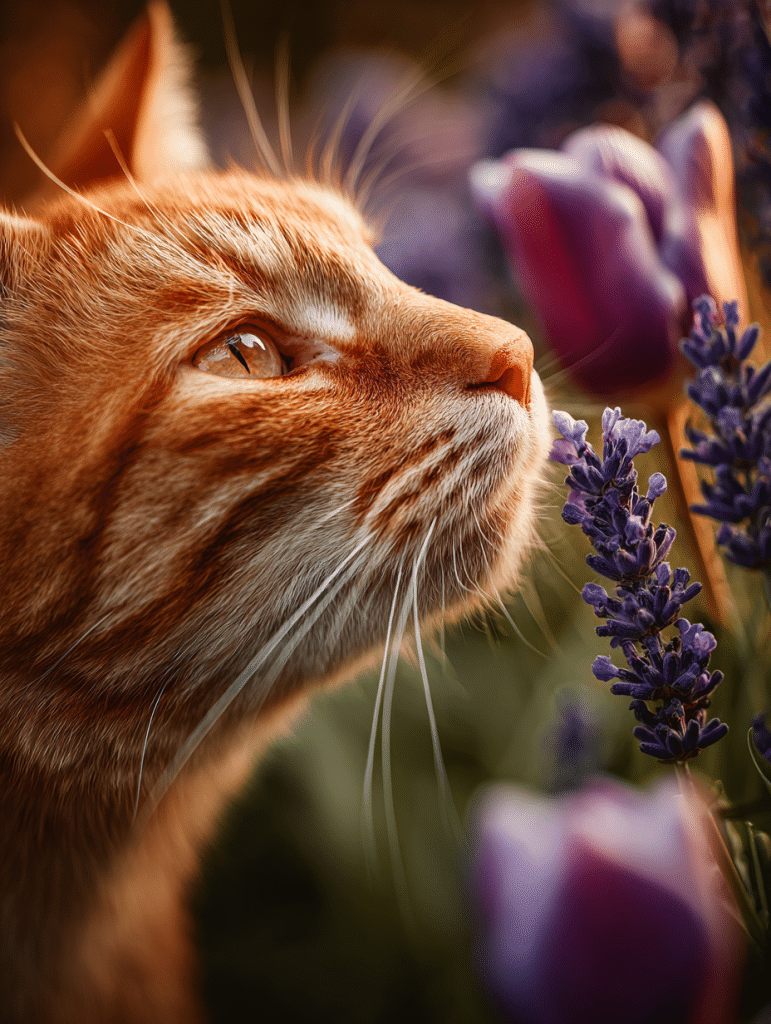
Our article Is Lavender Safe for Cats? explores one commonly mistaken plant.
Essential Oils: Aromatherapy or Danger?
Essential oils can be more toxic than the worst human foods for cats. Cats lack the enzymes to break them down, which can lead to liver damage.
Avoid air diffusers and cleaners with oils. See our lavender guide for more on what’s safe.
Essential Oils: Aromatherapy or Danger?
Lavender oil, tea tree, eucalyptus—these might be soothing for humans, but they’re often harmful to cats. Cats lack the liver enzymes needed to break down certain compounds in essential oils. Inhaling or absorbing these oils through the skin can cause liver damage, tremors, or respiratory issues.
Diffusers, sprays, and even cleaning products with essential oils should be used with caution—or better yet, avoided entirely. Our cats live close to the floor (and us), so surfaces and air quality matter.
To keep your feline family safe, stick to vet-approved grooming and cleaning products. Explore the truth behind cat-safe scents in our article on Lavender and Cats.
Curious About Other Human Foods? Here’s What You Should Know:
While yogurt is one of the more debated cat snacks, many pet parents also wonder about other human foods. Some are surprisingly safe — others, potentially dangerous. Here’s a quick reference to our most trusted food safety guides:
Blueberries: Yes, one or two blueberries are generally safe for cats and provide antioxidants. It’s important to cut them in half to prevent a choking hazard. (For a complete overview, see our full guide: Can Cats Eat Blueberries?)
Honey: In very small amounts, honey isn’t toxic, but it has no nutritional benefit for cats and may upset their stomach. (Learn when to avoid it here: Can Cats Eat Honey?)
Grapes: NO. This is one of the most important rules. Grapes and raisins are highly toxic to cats and can cause kidney failure. (Read about the dangers in our critical safety guide: Can Cats Eat Grapes?)
Yogurt: If you landed here first, don’t miss our in-depth guide to the pros, cons, and correct types of yogurt for cats. (Explore more: Can Cats Eat Yogurt?)
Pepperoni: Not recommended. While a tiny piece won’t immediately harm your cat, pepperoni is packed with salt, fat, and spices that can upset your cat’s digestive system or even lead to long-term health issues. (Learn why it’s best to avoid it in our full guide: Can Cats Eat Pepperoni?)
Frequently Asked Questions about Human Foods for cats (FAQs)
What should I do if my cat eats something toxic?
This is a potential medical emergency, and acting quickly is key.
Step 1: Identify the Toxin. If possible, determine exactly what your cat ate and how much.
Step 2: Call for Help Immediately. Do not wait for symptoms to appear. Contact one of these resources right away: Your local veterinarian or the nearest emergency vet clinic.
The ASPCA Animal Poison Control Center: (888) 426-4435 (A consultation fee may apply).
The Pet Poison Helpline: (855) 764-7661 (A consultation fee may apply).
Step 3: Follow Their Instructions. Do not try to induce vomiting unless specifically instructed to do so by a veterinary professional.
Why does my cat beg for my food?
Cats are curious creatures! Often, begging isn’t about hunger but about social behavior and scent. They might be interested because:
It smells appealing: A warm, savory scent can pique their curiosity.
It’s a bonding moment: They see you eating and want to be part of your social activity.
They’ve been rewarded before: If you’ve given in once, they’ve learned that begging works!
3. How often can I give my cat human food “treats”?
The golden rule, recommended by veterinarians, is the 10% rule. Treats, including safe human foods, should never make up more than 10% of your cat’s total daily caloric intake. For most cats, this means a very small amount—think one or two blueberries, or a tiny flake of cooked salmon, not a whole portion.
4. Can my cat eat dog food?
A single, accidental bite of your dog’s kibble is not harmful. However, cats cannot thrive on dog food long-term. Cat food is specifically formulated with higher levels of protein and certain essential nutrients that cats, as obligate carnivores, cannot produce themselves—most importantly, Taurine. A diet deficient in taurine can lead to severe heart disease and blindness in cats.
5. What about raw meat? Isn’t that more “natural” for them?
While cats in the wild eat raw prey, serving raw meat from the grocery store carries significant risks. Raw meats can be contaminated with dangerous bacteria like Salmonella and E. coli, which can make both your cat and the humans in your home very sick. It’s always safest to serve meat that has been cooked plain, with no spices or oils.
Conclusion: When in Doubt, Don’t
Sharing food with your cat can feel like an act of love—and sometimes it is. But their digestive systems are vastly different from ours. A morsel of cooked chicken? Fine. A lick of your chocolate cake? Dangerous.
Stick to the 90/10 rule. When you’re tempted to share, check our full list of food guides for cats and always introduce new items slowly. At Pawful of Love, we believe in feeding with feeling—but never at the cost of safety.
Want more healthy, homemade ideas for your pets? Follow us on Facebook and explore daily inspiration on Pinterest.