If you’re looking for a heartwarming way to celebrate your feline’s big day, a homemade cat birthday cake is the perfect gesture. This guide walks you through cat-safe ingredients, celebration ideas, store-bought vs. homemade options, and how to make it extra special—even for picky eaters. From pâté-filled cakes to mashed potato frosting and catnip “sprinkles,” we’ll show you how to turn a simple dish into a moment of love and bonding. Whether you’re a first-timer or seasoned treat-maker, this one’s for every cat parent who believes birthdays are better when shared—whiskers and all.

Table of Contents
Why I Started Making Cat Birthday Cake
Mochi is the queen of our home. She doesn’t just walk; she glides. She doesn’t meow; she converses. When her first birthday came around, I knew I had to make something special—something that said, “You matter to me.” But when I looked at the store’s offerings, they felt cold and artificial. So I took a cue from my experience with Mocha’s homemade birthday cake and made something for Mochi that celebrated her essence.
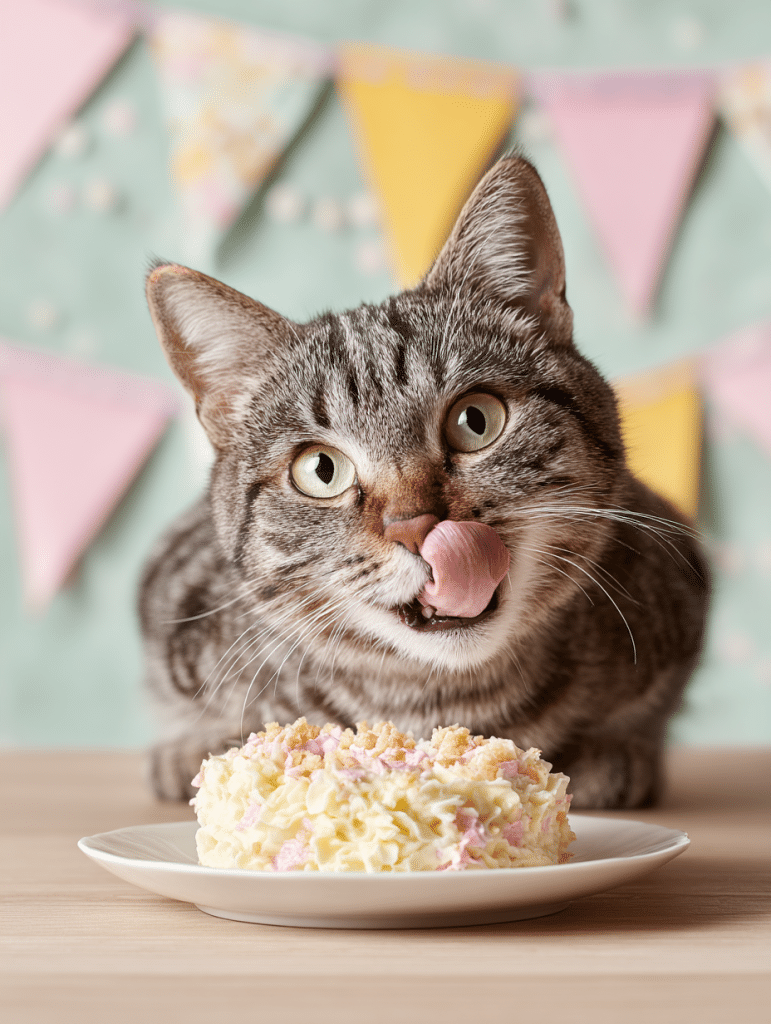
I layered a soft salmon pâté with a sprinkle of crushed treats, frosted it with plain mashed potatoes, and garnished it with dried catnip. The moment I placed it in front of her, she paused, sniffed, and slowly began to eat. Then she purred… and blinked that slow, trusting blink that only cats give when they’re truly content.
That’s when I realized something profound: baking for your cat isn’t about the food. It’s about presence. It’s about offering love in the language they understand—comfort, attention, and ritual.
Whether you have a kitten or a senior feline, a birthday cake is a way to bond. You’re not just serving dinner—you’re creating a memory. And who says cats don’t appreciate that?
If you’re new to feline nutrition, check out our human foods for cats list to stay safe while crafting something special.
What Can I Give My Cat as a Cat Birthday Cake?
Cats have different dietary needs than dogs, so a cat birthday cake calls for simple, protein-rich, and soft ingredients. The base of most homemade cakes is a high-quality pâté—chicken, salmon, tuna, or turkey are all fair game. You can mix in crushed dry treats to add texture and familiarity.
To “frost” the cake, use plain mashed potatoes (no garlic, butter, or salt!) or pumpkin purée for a soft, spreadable finish. For decoration, sprinkle dried catnip or top with a sardine or freeze-dried treat.
Here’s a simple ingredient idea:
- 1 can pâté-style cat food
- 1 tbsp powdered dry cat treats
- 1/4 cup plain mashed potatoes
- Catnip or a favorite treat to garnish


Cat Birthday Cake: Safe, Simple, and Adorably Tasty Ideas
- Total Time: 50 mins (including chill time)
- Yield: 1 cake 1x
Description
A soft and savory cat birthday cake made with pâté, mashed potatoes, and topped with catnip. Healthy, easy, and feline-approved!
Ingredients
1 5.5 oz can pâté-style cat food
1/3 cup dry cat treats (crushed into powder)
1/4 cup plain mashed potatoes (unsalted)
Catnip (optional, for topping)
Instructions
1. Blend dry cat treats into a fine powder using a grinder or blender.
2. Mix the powdered treats with pâté in a bowl until well combined.
3. Scoop mixture onto plastic wrap, shape into a round puck, and chill for 30–40 minutes.
4. Remove from wrap and place on plate. Frost with mashed potatoes using a spatula.
5. Decorate with catnip or favorite cat treats. Serve immediately or refrigerate for 1 day.
Notes
You can use pumpkin puree instead of mashed potatoes.
Make it fun by shaping it in a ramekin or cookie cutter.
- Prep Time: 10 mins
- Cook Time: 0 mins
- Category: Cat Treats
- Method: No-Bake
- Cuisine: Pet-Friendly
Nutrition
- Serving Size: 1 slice
- Calories: 237
- Sugar: 1g
- Sodium: 424mg
- Fat: 2g
- Saturated Fat: 0.4g
- Unsaturated Fat: 1g
- Trans Fat: 0g
- Carbohydrates: 16g
- Fiber: 1g
- Protein: 37g
- Cholesterol: 66mg
Looking for more ingredient inspiration? Our article on can cats eat honey explains why sweetness isn’t necessary for feline flavors, and gives helpful alternatives.
What Kind of Cake is Safe for Cats?
Not all pet cakes are created equal. Cats are obligate carnivores, which means their digestive systems are built for meat—not grains or sugars. Avoid baking with flour, dairy, or sweet ingredients. Instead, opt for pâté that holds its shape and offers a firm consistency when chilled.
Texture matters. Shreds or chunks in gravy won’t mold into a cake form unless drained and mashed. Stick with smooth pâté formulas and avoid fillers. You can even mold the cake in a ramekin or silicone mold for a cute shape.
Need help deciding what’s safe and what’s not? Bookmark our can cats eat yogurt guide for insight on common food myths and safe alternatives.
If your cat is extra sensitive, check out our writeup on chicken broth for cats—another great ingredient to incorporate in savory birthday recipes.
Can Cats Eat Cake for Their Birthday?
Yes, as long as the “cake” is cat-friendly! You’re not giving your cat a slice of chocolate layer cake—you’re offering a creative meal that feels festive but fits their diet. Use a small portion of their regular food base (or a treat-like version of it) and supplement with safe toppings.
Only serve a few bites. Even healthy cat cakes should be viewed as a treat—not a full meal. Think of it like the feline version of a birthday cupcake. If your cat doesn’t finish it, refrigerate the rest and use it the next day.
Want something lighter? Try a mashed tuna “muffin” or a small pumpkin-chicken mold served on a favorite plate. You can even drizzle a few drops of warmed bone broth on top as a finishing touch.
Safe Substitutes and Recipe Variations
No potatoes? No problem. Swap mashed potatoes with pureed pumpkin or sweet potato (unsweetened and plain). These provide fiber and a creamy texture for “frosting.” If your cat dislikes fish, try chicken or turkey pâté.
Want to make it extra fancy? Layer two different flavors of pâté and pipe the topping using a ziplock bag. Press freeze-dried treats into the sides like sprinkles or shape it into a heart using a ramekin.
And if you’re unsure about a particular food, refer to our resource on safe and toxic fruits for cats to stay confident about each bite.
Is Feast of Delectable cat Birthday Cake Reusable?
Some pet brands now offer shelf-stable birthday cakes in foil packaging or pouches. While these can be convenient for travel or gifting, they often contain preservatives and less-fresh ingredients. “Reusable” can sometimes mean resealable—but not always recyclable or long-lasting in quality once opened.
If you choose store-bought, use it the same day, or transfer leftovers to a clean container and refrigerate for up to 24 hours. Avoid brands that use unnecessary fillers, colorants, or added sugars. Look for options with named meat sources and no byproducts.
Benefits of Homemade Over Packaged Cakes
Homemade cat birthday cake win in nearly every category: freshness, personalization, and ingredient control. You can avoid allergens, test new flavors, and use quality cat food you already trust. Plus, there’s something irreplaceable about making it yourself.
Your cat may not understand the effort, but they’ll feel the care. And it’s just fun—especially if kids are involved in decorating. Use a piping bag, press treats into the sides, or shape the cake like a fish.
And when the celebration ends, you’ll know exactly what went into their dish—no guessing, no preservatives. That’s what a pawful of love really looks like.
FAQ
What can I give my cat as a birthday cake?
You can make a cat birthday cake with canned pâté-style cat food, mashed potatoes or pumpkin, and powdered treats. Add catnip or a favorite topper for decoration.
Can cats eat cake for their birthday?
Yes, as long as it’s made from safe ingredients like meat pâté, and free from sugar, chocolate, and grains. Serve in small portions.
What kind of cake is safe for cats?
Soft, moldable pâté-based cakes are ideal. Avoid dairy, sugar, flour, and spices. Use mashed vegetables or pumpkin for “frosting.”
Is Feast of Delectable Birthday Cake reusable?
Not exactly. It can be refrigerated for 1 day after opening, but is not truly reusable or recyclable. Homemade cakes offer better quality and freshness.
Conclusion
Your cat may not ask for a party—but when you present a homemade cake made just for them, they’ll know. Through the purrs, the blinks, and the gentle nuzzles, they’ll show you that these little moments matter. A cat birthday cake isn’t just a treat. It’s a gesture of love, made with your own hands. And that makes it worth every minute.
Want more healthy, homemade ideas for your pets? Follow us on Facebook and explore daily inspiration on Pinterest.