If your cat has been coughing lately, it can be unsettling—and downright confusing. Is it a hairball, or something more serious? Why Is My Cat Coughing ? In this guide, we’ll explore the most common causes of cat coughing, from harmless irritants to serious health concerns. We’ll also walk you through when to worry, what to do, and how to keep your furry friend safe, healthy, and breathing easy. Whether your cat’s cough sounds dry, wet, or gaggy, we’re breaking it all down here. Let’s begin.
Table of Contents

Living With Mocha, Mochi, and the Mystery Cough
That One Quiet Night That Turned Into Worry
Mocha had always been a quiet sleeper—snuggled on the rug, paws twitching in dreamland. But one night, I heard a sound that didn’t belong: a sharp, hacking cough. She looked confused, almost startled by her own body. I froze. Was it just a one-off? Mochi lifted her sleepy head but didn’t budge from the countertop throne. I sat with Mocha for a while, watching, waiting. That moment sparked a journey into understanding why cats cough and what it means when they do.
It wasn’t hairball season. And it wasn’t normal.
That question—why is my cat coughing—sent me down a rabbit hole I never expected, but every pet parent should explore.
When a Cough Is More Than Just a Hairball
We often assume every cough is a hairball. But not all coughing in cats is due to fur. Sometimes, it’s respiratory. Other times, it’s triggered by dust, allergies, or even heartworms. And according to Cats.com, coughing is less common in cats than dogs—so when it happens, it matters.
As I learned through my vet visit and a little deep dive into resources like pawfuloflove.com/healthy-homemade-cat-food, coughing could point to asthma, infections, or even a foreign object. Mocha’s case? Allergic bronchitis. Not dangerous, but definitely treatable—and a relief to finally understand.
Allergies, Irritants, and Everyday Triggers
Environmental Allergies in Indoor Cats
Did you know even indoor cats can have seasonal allergies? Air fresheners, cleaning sprays, dust from litter—all of these can irritate your cat’s lungs. Many cats, like Mocha, are sensitive to fragrance-loaded products. I once used a lavender floor cleaner. Within hours, her gentle purrs turned into wheezy hacks.
Feline coughing often starts subtly: a gag, a hiccup, a dry heave. And unless it’s accompanied by vomiting hair, it’s likely not a hairball. If your cat is only coughing—especially after you’ve cleaned the house or sprayed perfume—it could be a reaction to irritants.
To support respiratory health, I swapped my scented litter for an unscented, dust-free brand. I also began using air purifiers and eliminated chemical sprays.

Hidden Home Hazards That Make Cats Cough
Coughing may also result from accidental inhalation of small particles—like dust, plant spores, or even tiny toys. If Mochi knocks over a plant, it’s always a cleanup emergency… not just for the mess, but because of airborne particles she might breathe in.
According to experts at Cats.com, inhaled foreign bodies can irritate the airway and create persistent coughing. If your cat is suddenly coughing after chewing on grass, a seed or leaf fragment could be the culprit.
Keeping your home free of small, loose objects—especially things like incense ash, essential oils, and dryer sheets—can dramatically reduce risk. For more preventive care ideas, check out our guide on natural cat-safe plants.
Medical Conditions That Trigger Cat Coughing
Feline Asthma, Respiratory Infections, and More
Feline asthma affects nearly 1% of all cats, and it’s a leading cause of chronic coughing. Mocha’s vet explained that asthma can be triggered by allergens or stress and may cause wheezing, mouth breathing, or open-mouthed panting.
In addition to asthma, respiratory infections—especially in kittens and cats from shelters—are extremely common. Sneezing, nasal discharge, and loss of appetite often accompany coughing in these cases.
If your cat’s cough is persistent and sounds wet or phlegmy, infections like feline herpesvirus or calicivirus might be involved. Treating infections often involves antibiotics, antivirals, or steroids, depending on the diagnosis. Learn more about feline respiratory wellness in our sensitive tummy meals guide.
Parasites and Heartworms: What You Need to Know
Most people associate heartworms with dogs, but cats can contract them too—especially if they live in mosquito-prone areas. Heartworm symptoms in cats include coughing, weight loss, and lethargy. It’s less common, but potentially fatal.
Lungworms, on the other hand, are more common in outdoor or raw-fed cats. These parasitic infections settle in the lungs and trigger persistent dry coughing. Cats may also display nasal discharge and labored breathing.
Monthly preventatives like Revolution or Advantage Multi help protect against heart worms and lungworms. If you want to go the extra mile, homemade parasite-safe treats can support immune health in natural ways.
Diagnosing Your Cat’s Cough
From Video Evidence to Vet Visits: What Helps
When I brought Mocha to the vet, the first thing they asked was, “Can you show me what the cough sounds like?” Thankfully, I had a clip on my phone. If your cat coughs sporadically, take a quick video. It makes diagnosis easier and faster.
Your vet will want to know how often the cough happens, whether it’s wet or dry, if it happens after activity or while resting, and if your cat eats or drinks normally. These small clues help distinguish between asthma, infection, or foreign object concerns.
Documenting symptoms and collecting environmental clues—like new litter brands or air fresheners—can save valuable time in diagnosis. For help documenting cat symptoms effectively, download our pet care tracking sheet.
Tests and Imaging: What to Expect at the Clinic
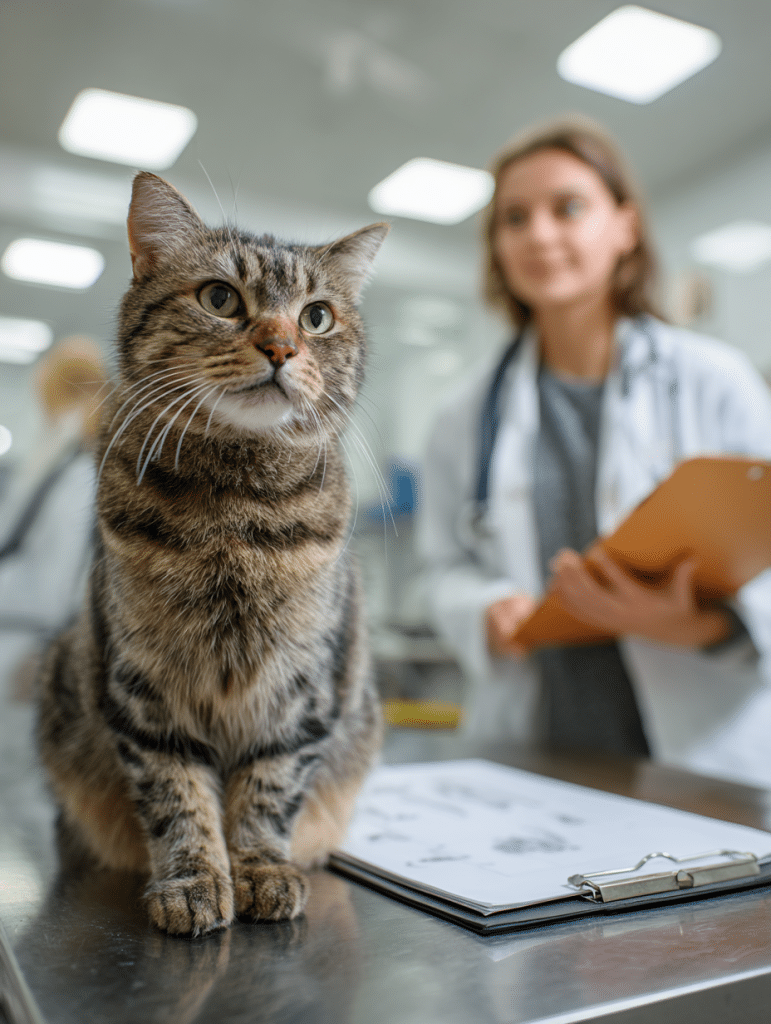
Expect a full physical exam followed by diagnostic testing. Depending on severity, the vet may recommend:
- Bloodwork and urinalysis.
- Chest X-rays
- Fecal exams
- Heartworm tests
- Bronchoscopy (in advanced cases)
These tests help uncover the true cause behind your cat’s cough. The good news? Most causes are treatable—especially if caught early. Your vet might also check for food sensitivities. Learn how nutrition impacts feline immunity in our homemade gut-soothing meals.
Treatment, Prevention & Home Care
Medications, Lifestyle Adjustments, and More
Treatment depends on the diagnosis. Allergies and asthma are often managed with antihistamines, bronchodilators, or steroids. Respiratory infections might require antibiotics or antivirals. If your cat coughs due to worms, a dewormer or heartworm treatment will be needed.
Environmental changes can also support healing:
- Use HEPA air filters
- Switch to unscented litter
- Avoid essential oils and sprays
- Clean with pet-safe solutions
I saw huge improvement after switching Mochi’s food to anti-inflammatory recipes . Just like us, cats breathe better when their body isn’t constantly inflamed.
Can You Treat Mild Coughing at Home?
If your cat’s coughing is occasional and not paired with other symptoms, you might be able to monitor at home—but only briefly. Hydration, reducing irritants, and supporting the immune system with healthy food are key.
However, coughing that lasts more than 24 hours, increases in frequency, or is paired with other signs like lethargy or vomiting requires a vet check immediately. When in doubt, choose caution. It could make all the difference.
For home-care recipes to support breathing and healing, see our steamed chicken cat meal.
FAQs
What should I do if my cat is coughing?
Start by observing your cat closely—note how often it happens and what the cough sounds like. Eliminate potential irritants at home and book a vet appointment to rule out serious causes.
When should I worry about my cat’s cough?
If coughing is persistent, paired with labored breathing, or your cat shows other symptoms like lethargy or not eating, it’s time to see a vet.
Why does my cat cough like something is stuck in his throat?
This could be due to a stuck hairball, irritation from inhaled material, or even feline asthma. If it’s frequent, get a vet’s opinion.
Why does my cat cough but no hairball?
Dry coughing without hairballs is often related to asthma, infection, or airborne irritants. It’s not normal and should be evaluated.
Conclusion
Coughing is rare in cats—but meaningful. Whether it’s due to allergens, parasites, or illness, it’s your cat’s way of saying something’s off. By staying alert, making smart changes, and working with your vet, you can ensure your feline family breathes easy again.
For more cat wellness guides and healing recipes, explore pawfuloflove.com.
We believe every paw deserves love 🐾. Join our community on Facebook and discover more comforting recipes & tips on Pinterest.